1.9 Kilometers of Oxford Street Go Traffic-Free for Holidays
London Mayor Sadiq Khan opens the pedestrian zone ahead of Christmas, diverting buses to side roads and splitting reactions among shoppers and drivers.
By Camila Vargas ·
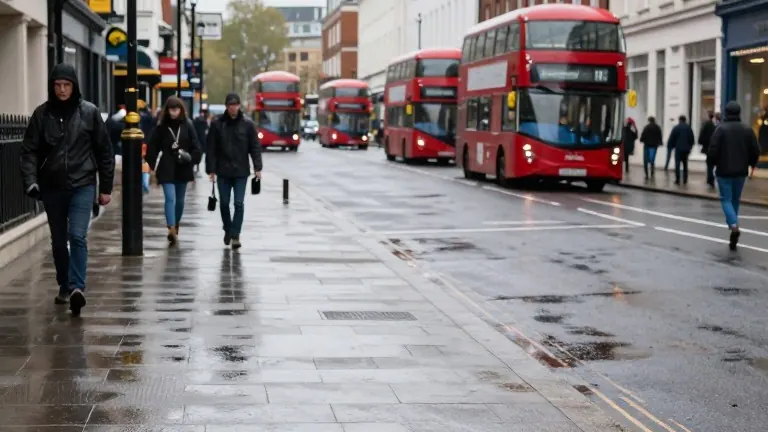
Almost a kilometer of Oxford Street, the 1.9-mile stretch between Oxford Circus and Marble Arch, is now vehicle-free. The change took effect on Monday morning, just in time for the busy Christmas shopping period. All private cars, buses, bikes, taxis, e-scooters, and pedicabs are banned from the closed section.
Sadiq Khan, the Mayor of London, declared it a "momentous day" during a speech at John Lewis. He noted that the street had seen a decline over the last two decades. Khan said pedestrianizing the area with better public transport links, more greenery, and seating would create a better experience for everyone. He described the move as a proof of concept, arguing that investing in people rather than traffic leads to higher footfall and spending.
Shoppers on the street welcomed the extra space. Daniel Te, who moved to London from the US in July, said he used to avoid the street because it was too busy. He observed that most people still walked on the pavement, but the new layout felt like an expanded scramble crossing. Te called it a big achievement and said the change made him more inclined to visit the area.
Raquel Cox, a visitor from Ireland, said she had to see the change first-hand after watching a news report. She acknowledged that surrounding streets might get busier but called it a better experience for shoppers. Abbas Shigival, who runs a souvenir kiosk at the start of the pedestrian zone, said the morning felt busier than usual. He described the environment as more pleasant because people could walk around without obstruction.
Transport for London Chief Operating Officer Claire Mann said there would be plenty of capacity for passengers on the diverted bus routes. She noted that the Elizabeth Line and Bond Street provide alternative ways to arrive. However, not everyone supported the change. Ben McMullan, a taxi driver, said traffic was worse on surrounding streets and accessibility was a major problem. He said he had dropped off customers who struggled with the lack of direct car access, including a mother with a pram and a woman with walking difficulties.
Jack, a cyclist stopped by security guards, said he would ride down the road regardless of the rules. He argued that the change made his commute longer and disagreed with pedestrianization on principle, comparing it to low traffic neighborhoods that make it harder for people to use vehicles.
A permanent transformation of the street is planned for spring 2027. The 150 million pound project will include trees, seating, and level plazas for events. Khan said London would closely monitor the current phase to ensure the changes work for everyone.
Source: The Guardian