Doha drafts five-year plan for independent defense
The strategy aims to reduce reliance on American forces by 2031 through integrated air defenses and diversified alliances.
By Camila Vargas ·
Qatar is moving to secure its own military future. The state intends to build a national defense capability that functions even if the United States offers only limited support. This shift addresses a fundamental question raised by recent Gulf developments: how small states can protect themselves without waiting for external rescue.
The plan targets a specific deadline. By 2031, Doha wants to achieve what it calls defense autonomy. This is not isolation. Qatar remains open to partnerships. However, it no longer wants its safety to depend entirely on the decisions of another state. The goal is to prevent threats, withstand attacks, and maintain continuity without a single guarantor.
Qatar holds distinct advantages. It possesses substantial financial resources and a sensitive geographical location. Its economy relies on the uninterrupted flow of energy exports and shipping. The country also hosts a major US military base and maintains advanced air defense capabilities. Yet, in major crises, its protection remains heavily dependent on American power. Collective Gulf support does not guarantee that other members will take risks for Doha.
The strategy rests on six pillars. These include air and missile defense, early warning capabilities, protection of critical infrastructure, air and naval power, cybersecurity, and diversified security guarantees. The objective is not to build an army capable of defeating a major regional power alone. That ambition is unrealistic for a small country. Instead, Qatar seeks to perform essential tasks independently, such as detecting threats and maintaining energy supplies.
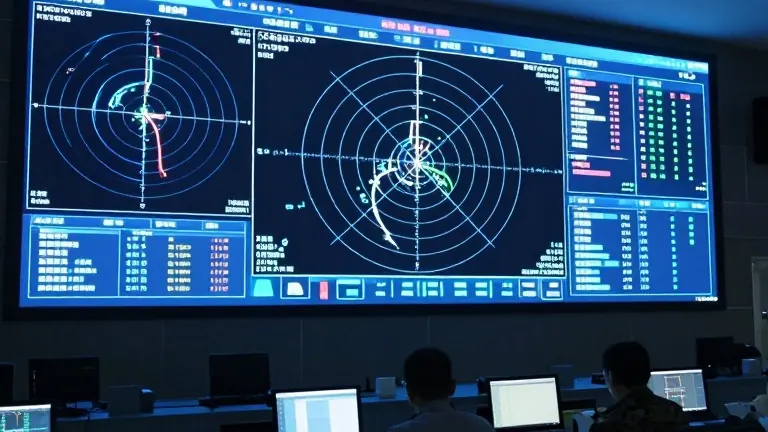
Air defense is the primary focus. Possessing fighter aircraft is not enough. Qatar needs an integrated national system. This includes a multilayered radar network, unified command and control, and expanded counter-drone capabilities. The system must function without US forces. It requires large stockpiles of ammunition and mobile protection for radar installations. The aim is a shield that persists even if external aid stops.
The air force must sustain operations for weeks without foreign supply lines. This requires increased domestic maintenance capacity and dispersed ammunition storage. Qatar plans to train more personnel for maintenance roles and increase drone stocks. It also seeks to develop ground and aerial refueling capabilities. The goal is a reduced but independent operational level.
Maritime security is the second line of defense. Qatar is a peninsula surrounded by water on three sides. Its exports of liquefied natural gas and oil depend on secure waters. The plan does not call for a large fleet. It calls for a force that makes attacks on maritime infrastructure difficult and costly. This involves improving surveillance, countering maritime drones, and securing shipping routes and ports.
Infrastructure protection is the most serious vulnerability. A successful attack on a few critical facilities could paralyze the country. The strategy includes a national resilience program. This protects gas facilities, water desalination plants, power stations, and data centers. Every sector needs backup capacity. If a major desalination plant stops, an alternative source must exist to prevent a national crisis.
Intelligence capabilities must also become independent. Qatar needs to know what is happening around it before relying on others. The plan calls for space-based reconnaissance, unmanned aerial vehicles, and artificial intelligence-driven data analysis. This does not mean launching large satellites for every mission. It means combining commercial and military assets. Qatar will still use intelligence from the US, France, and the UK, but it must produce its own national intelligence picture.
The final pillar is diversifying security guarantees. Recent events showed that reliance on a single power is risky. The US could become involved in other crises or reduce its regional presence. Doha should pursue partnerships with South Korea, Turkey, and European powers. It should also work with regional powers like Pakistan and China in specific fields. This diversification is not an alliance against the US. It is a method to reduce the risk of dependence on a single supplier.
Source: Al Jazeera