Israel Votes as War Defines Tight Knesset Race
Polls indicate neither the Netanyahu-led bloc nor the opposition is projected to secure a majority of the 120 parliamentary seats.
By Andrew Wilson ·
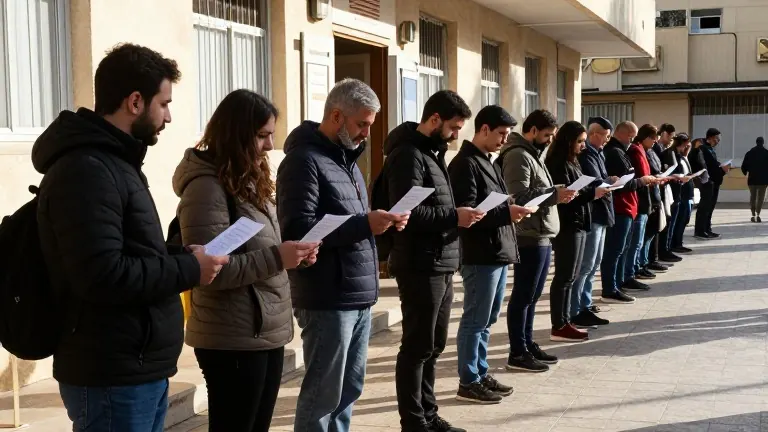
Israeli voters will head to polling stations on Tuesday, October 26, in a general election that current polling suggests may result in a fragmented parliament. After three years of multi-front conflict, the race for the 120 seats in the Knesset appears poised for a stalemate, with no single faction projected to command a decisive majority.
Pre-election surveys show a narrow margin between the two main political camps. Right-leaning polls favor the coalition led by Prime Minister Benjamin Netanyahu, while left-leaning polls show an edge for the opposition group known as the change bloc. Most data indicates that neither side will cross the 61-seat threshold required to form a government independently, setting the stage for complex coalition negotiations or a repeat election.
Yohanan Plesner, president of the Israel Democracy Institute, stated that an indecisive outcome is the most probable result. The voting takes place while Israel continues military operations in Gaza, Lebanon, and Syria following the Hamas attacks of October 7, 2023. Authorities have described the security failure as the most severe since the country's founding in 1948.
Netanyahu, seeking a fourth term as prime minister, argues that his experience is essential for concluding the war and preventing Iran from obtaining nuclear weapons. His campaign slogan, which rhymes in Hebrew, translates to: "Either right wing or Palestine, either right wing or a nuclear bomb." U.S. President Donald Trump offered explicit support for Netanyahu last week, warning that the United States might have to conduct operations itself if a different leader emerges.
Opposing Netanyahu is a diverse alliance of centrist, left-wing, and Arab parties united by their desire to replace the incumbent. Gadi Eisenkot, a former military chief of staff and leader of the centrist Yashar party, is the front-runner for the change bloc. Eisenkot, who lost his son and two nephews in the Gaza war, promises to launch a state inquiry into the intelligence failures of 2023, a step Netanyahu has previously blocked.
Eisenkot criticized Netanyahu's use of fear in the campaign, specifically referencing an AI-generated image of a nuclear mushroom cloud over Tel Aviv that Netanyahu posted on social media. Eisenkot said the tactic of relying on lies and threats would not succeed this time. He frames his candidacy as a return to humility and national unity after years of division.
Voter turnout among Arab Israelis, who comprise approximately 20% of the population, may be a deciding factor. Higher participation in this demographic reduces the likelihood of Netanyahu forming a government with his current far-right allies. Two new parties challenging the ultra-Orthodox draft exemption are also hovering near the electoral threshold, potentially altering the balance of power.
If no clear majority emerges, Israel faces several options: a minority government, a coalition built through side-switching, or new elections. Between 2019 and 2022, the country held five elections due to similar deadlocks. Plesner noted that if politicians stick strictly to their campaign promises, another election is likely, though most politicians prefer to avoid that scenario.
Source: CBS News